
Selecting the right tooling for natural stone fabrication often comes down to a critical balance between initial expenditure and long-term operational efficiency. For many contractors, the primary concern is the marble cutting blade price, yet this figure alone rarely tells the full story of a project's profitability.
The cost of a diamond blade is intrinsically linked to its bond hardness, diamond concentration, and the specific mineral composition of the marble being processed. Using a low-cost blade on high-density stone can lead to premature glazing, increased heat friction, and costly downtime, effectively erasing any initial savings.
To optimize procurement, buyers must look beyond the sticker price and evaluate the "cost-per-linear-meter." This guide analyzes the technical variables that influence pricing and provides a framework for selecting blades that maximize lifespan without compromising precision.


In the diamond tool industry, price is primarily driven by the quality of the synthetic diamonds and the precision of the sintering process. Lower-priced blades often use lower-grade industrial diamonds with inconsistent size distributions, which can lead to uneven wear and "chipping" on the marble surface.
Conversely, professional-grade tools undergo rigorous quality control. For instance, Mingye Tools employs professional inspection machines to test every single unit, ensuring that the quality remains stable across large production batches. This consistency reduces the risk of unexpected blade failure during high-value installations.
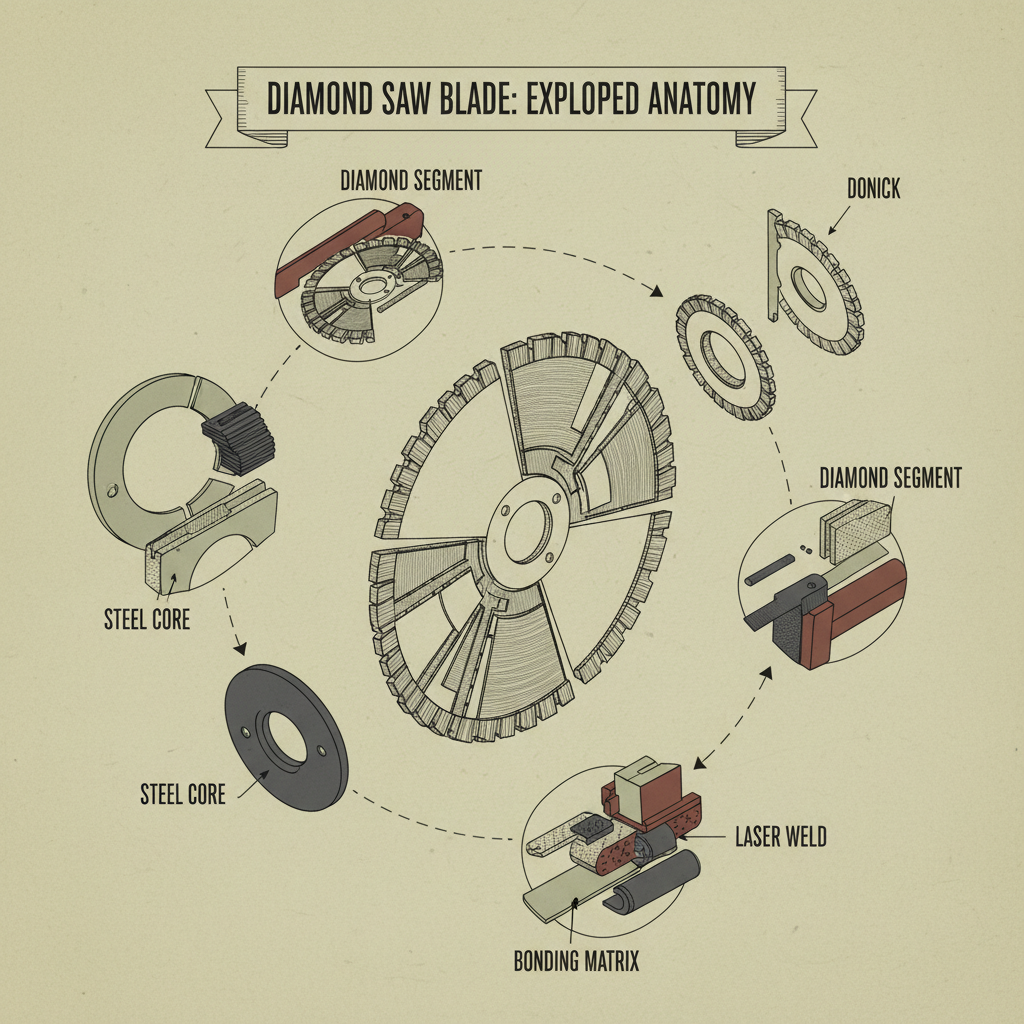
The "bond" is the metal matrix that holds the diamond crystals in place. The pricing of a blade often varies based on whether the bond is soft, medium, or hard. A soft bond is designed to wear away quickly, constantly exposing new, sharp diamond crystals. This is essential for hard surfaces where diamonds dull rapidly.
For softer materials like certain types of marble, a harder bond is required. If a soft-bond blade is used on soft stone, the matrix wears away too quickly, wasting expensive diamonds and shortening the tool's lifespan. This mismatch is a common reason why buyers perceive some blades as "too expensive" or "poor quality" when the error is actually in the selection of the bond.
Technical precision in the sintering of the metallic powder determines how efficiently these crystals are released. High-end blades utilize a more refined metallic powder distribution, which minimizes friction and reduces the heat generated during the cutting process, preventing surface burns on the workpiece.
The geometry of the segment—the part of the blade that actually touches the stone—directly impacts cutting speed and the resulting finish. Continuous rims are preferred for smooth, chip-free cuts in marble, while segmented rims allow for faster cooling and quicker material removal.
Tooling efficiency is not determined by the diamond's hardness alone, but by the synergy between the segment's shape and the bond's erosion rate, which determines the total linear footage a blade can cut before replacement.
Advanced designs, such as the double-row segments found in specialized grinding tools, increase the contact area and enhance the "handhold feeling" for the operator. This reduction in vibration not only improves safety but also increases the precision of the cut, reducing the amount of polishing required in the final stage.
Different projects demand different tooling specifications. In heavy infrastructure or road resizing, durability and heat resistance are the priority, justifying a higher initial investment in hard-bond blades. In contrast, interior decorative marble work requires a focus on edge precision and low friction.
The following index illustrates the relative relationship between material hardness and the required bond strength to maintain a stable cost-to-performance ratio.
Even the most expensive blade will fail prematurely if used incorrectly. Over-pressuring the tool during the cut generates excessive heat, which can cause the metal bond to soften or the diamond crystals to shear off. This not only increases the effective marble cutting blade price over the project's life but can also damage the stone.
Proper water cooling is non-negotiable for marble fabrication. Efficient cooling reduces the friction coefficient and removes debris from the kerf, allowing the blade to maintain its cutting speed and preventing the "glazing" effect where the bond wears away but the diamonds remain dull.
The industry is moving toward more sophisticated vacuum brazing and sintering techniques. These processes allow for a more precise distribution of diamond grit, which translates to a more stable cut and longer dressing periods. For floor specialists, this means fewer interruptions and a more consistent finish across large surface areas.
Moreover, there is a growing demand for "hybrid" bonds that can adapt to varying stone densities within a single slab. While traditionally a blade was either "hard" or "soft," new metallurgical formulations are aiming to provide a broader operating window, reducing the need for frequent tool changes.
These innovations are particularly evident in tools used for aggregate exposure and floor flattening, where the blade must handle both soft binders and hard aggregates simultaneously. The result is a reduction in energy consumption and a safer environment for the operator due to lower vibration levels.
To make an informed purchase, buyers should evaluate their specific application against the tool's technical specs. A high-price blade used on the wrong material is a waste of capital, while a budget blade used on a high-precision project is a liability.
The key is to match the bond hardness to the material hardness. Hard surfaces require soft bonds to ensure the tool "self-sharpens" by shedding dull diamonds. Soft surfaces require hard bonds to prevent the matrix from eroding too quickly.
Below is a practical comparison matrix to assist in selecting the right diamond tool based on material and intended result.
| Material Type | Recommended Bond | Key Performance Goal | Lifespan Priority |
|---|---|---|---|
| Soft Marble | Hard Bond | Edge Precision | High (Wear Resistance) |
| Hard Marble/Travertine | Medium Bond | Cutting Speed | Balanced |
| Granite/Quartzite | Soft Bond | Self-Sharpening | Medium (Fast Erosion) |
| Reinforced Concrete | Hard Bond | Durability | Very High (Abrasive Resistance) |
| Ceramic/Porcelain | Specialized Bond | Chip-Free Finish | Medium |
| Mixed Aggregates | Medium-Soft Bond | Versatility | Balanced |
The price is mainly determined by the quality and concentration of the synthetic diamonds and the sophistication of the metal bond sintering. High-grade diamonds and precise manufacturing processes ensure a more stable cut and longer tool life, which increases the initial cost but lowers the overall cost per cut.
The general rule is: the harder the material, the softer the bond should be. On very hard stone, a soft bond wears away quickly to expose new, sharp diamonds. On softer marble, a hard bond is necessary to prevent the metal matrix from eroding too quickly, which would otherwise waste the diamonds.
Yes. Low-quality blades often have inconsistent bonds, leading to "glazing" or premature wear. This results in slower cutting speeds, more frequent blade replacements, and a higher risk of chipping the marble, which can lead to expensive rework or wasted material.
Continuous rim blades are designed for smooth, clean cuts without chipping, making them ideal for high-finish marble work. Segmented blades have gaps that allow for faster cooling and quicker debris removal, making them better for rough cuts or harder materials where speed is more important than a perfect edge.
Water cooling is essential to dissipate heat and remove slurry from the cut. Without it, the friction can reach temperatures that degrade the metal bond and cause the diamonds to shear off. Proper cooling ensures the blade operates within its designed temperature range, significantly extending its usable life.
Vacuum brazing typically allows for a thinner layer of diamond with very strong adhesion, which can be excellent for specific precision tasks or small-diameter tools. However, for heavy-duty cutting and grinding, sintered tools often provide a better balance of durability and cost-efficiency due to their thicker segment depth.
Ultimately, the true value of a diamond tool is measured by its performance over the entire lifecycle of a project rather than its purchase price. By matching bond hardness to material density and adhering to strict operational guidelines—such as proper cooling and appropriate feed rates—fabricators can significantly reduce their cost-per-cut.
Whether investing in precision cutting blades or heavy-duty grinding cup wheels, the goal should be to minimize downtime and maximize surface quality. A strategic approach to tooling selection ensures that every cut is sharper and every project is completed with greater efficiency.



Address
No.30 Gaoying Road ,Chang'an District,Shijiazhuang,Hebei Province
Business Hours
Mon to Saturday : 8.00 am - 7.00 pm
Sunday & Holidays : Closed





.png )