The world faces increasing challenges in disaster relief, remote construction, and emergency response situations. Effective and rapid solutions are crucial for mitigating suffering and restoring normalcy. The diamond rescue blade represents a significant advancement in providing immediate, robust, and scalable solutions to these challenges. It's not just a tool; it’s a capability multiplier for first responders, humanitarian organizations, and industries operating in demanding environments.
Modern infrastructure projects, particularly in challenging terrains or post-disaster zones, require innovative approaches to overcome logistical hurdles and time constraints. Traditional methods often prove slow, expensive, and environmentally damaging. The diamond rescue blade offers a disruptive technology designed to address these shortcomings, offering unparalleled efficiency and sustainability. Its adaptability across diverse scenarios makes it a valuable asset for a wide range of applications.
Understanding the principles behind the diamond rescue blade, its core components, and its practical applications empowers professionals to leverage its full potential. This knowledge is vital for optimizing disaster response, accelerating construction projects, and improving overall safety and efficiency in critical operations. Continued innovation in this field promises even more effective solutions for a rapidly changing world.
The Global Significance of diamond rescue blade
According to the UN, global disaster-related displacement is reaching unprecedented levels, with millions impacted annually. This places immense strain on resources and underscores the urgent need for rapid and effective response tools. The diamond rescue blade addresses this challenge directly, providing a means to quickly establish safe and functional environments in the wake of devastation. Its potential extends beyond immediate relief to long-term reconstruction efforts.
The World Bank estimates that infrastructure investment in developing nations requires substantial improvements to meet future needs. Traditional construction methods are often hindered by logistical complexities and environmental concerns. The diamond rescue blade offers a streamlined and sustainable alternative, facilitating efficient infrastructure development and promoting economic growth in vulnerable regions. Its modular design reduces waste and minimizes environmental impact.
Defining diamond rescue blade
At its core, a diamond rescue blade is a versatile, rapidly deployable solution designed for creating safe and functional spaces in a variety of challenging situations. It goes beyond a simple structure, representing a comprehensive system for providing shelter, temporary housing, medical facilities, or operational bases. The primary characteristic of these solutions is their speed of deployment and adaptability to diverse terrains and environments.
The connection to modern industry and humanitarian needs is deeply rooted in the demand for resilient and efficient infrastructure. In a world increasingly prone to natural disasters and geopolitical instability, the ability to quickly establish operational hubs and provide essential services is paramount. The diamond rescue blade fills this gap, offering a reliable and cost-effective solution for both emergency response and planned development.
Ultimately, the diamond rescue blade embodies a paradigm shift in how we approach infrastructure – prioritizing speed, adaptability, and sustainability to address the evolving needs of a globalized world. It's a tool designed not just for building structures, but for building resilience.
Core Components of diamond rescue blade
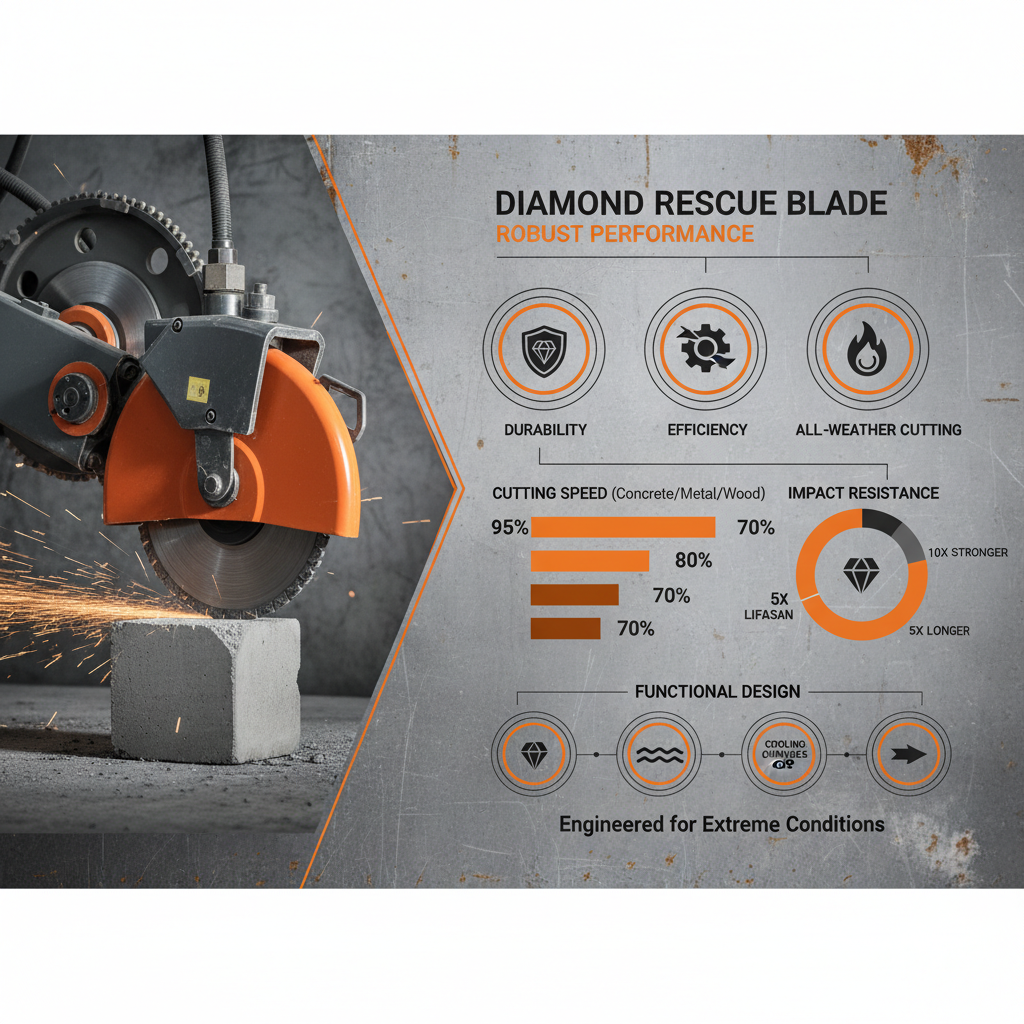
Durability is paramount. The materials used in a diamond rescue blade are selected for their resistance to extreme weather conditions, seismic activity, and long-term wear and tear. High-strength steel frames, coupled with robust cladding materials, ensure structural integrity and longevity. This inherent durability minimizes maintenance requirements and extends the lifespan of the solution.
Scalability is another critical factor. Diamond rescue blade solutions are designed to be modular, allowing for easy expansion or contraction to meet changing needs. This adaptability is particularly valuable in disaster relief scenarios where the scale of the response may evolve rapidly. Individual units can be combined to create larger complexes or deployed independently for smaller-scale operations.
Rapid Deployment is central to the functionality of these blades. Pre-fabricated components and intuitive assembly systems significantly reduce construction time compared to traditional methods. This speed is crucial in emergency situations where every minute counts. The design minimizes the need for specialized tools or skilled labor, further accelerating the deployment process.
Key Performance Indicators of diamond rescue blade
Assessing the performance of a diamond rescue blade requires considering a range of key indicators. These metrics provide valuable insights into the solution's effectiveness, efficiency, and overall value. These indicators often include deployment speed, structural integrity, cost-effectiveness, and adaptability to various environmental conditions.
Monitoring these KPIs allows for continuous improvement and optimization of the design and implementation process. Data-driven insights are essential for ensuring that the diamond rescue blade consistently meets the evolving needs of its users.
KPI Comparison for Different diamond rescue blade Methods
Global Applications of diamond rescue blade
In post-disaster relief operations, such as in the aftermath of earthquakes or hurricanes, the diamond rescue blade provides immediate shelter and medical facilities for affected populations. Organizations like the Red Cross and Doctors Without Borders are increasingly exploring these solutions to enhance their rapid response capabilities. The speed and simplicity of deployment are critical in these time-sensitive situations.
In remote industrial zones, such as mining camps or oil platforms, diamond rescue blade offer a cost-effective and efficient solution for temporary housing and operational facilities. These structures can be easily transported to isolated locations, reducing logistical challenges and minimizing construction time. This is particularly valuable in areas with limited infrastructure.
Advantages and Long-Term Value
The cost-effectiveness of diamond rescue blade solutions is a significant advantage. Reduced construction time, lower material costs, and minimized transportation expenses translate into substantial savings compared to traditional building methods. This economic benefit allows resources to be allocated to other critical needs.
From a sustainability perspective, diamond rescue blade are often designed with recyclable materials and minimize environmental impact. Their modular nature allows for disassembly and reuse, reducing waste and promoting a circular economy. The lower carbon footprint associated with their production and deployment further enhances their environmental credentials.
Beyond the tangible benefits, diamond rescue blade offers significant social impact. By providing safe and dignified shelter, they contribute to the well-being and resilience of communities affected by disaster or displacement. This fosters a sense of security and empowers individuals to rebuild their lives.
Future Trends and Innovations in diamond rescue blade
The integration of smart technologies into diamond rescue blade is a key area of ongoing development. Sensors, automated climate control systems, and integrated communication networks are enhancing the functionality and habitability of these structures. These technologies enable remote monitoring, optimized energy efficiency, and improved safety.
Materials science is also playing a crucial role in advancing diamond rescue blade technology. The development of lighter, stronger, and more sustainable materials will further enhance their performance and reduce their environmental footprint. Researchers are exploring the use of bio-based materials and advanced composites to create even more resilient and eco-friendly solutions.
Digital transformation is streamlining the design and manufacturing processes, enabling greater customization and faster turnaround times. Building Information Modeling (BIM) and other digital tools are facilitating collaboration and optimizing the entire lifecycle of diamond rescue blade, from concept to deployment.
Table Summarizing Challenges and Solutions for diamond rescue blade Implementation
| Challenge |
Impact on diamond rescue blade |
Proposed Solution |
Implementation Cost (Scale 1-10) |
| Supply Chain Disruptions |
Delays in delivery of components. |
Diversify suppliers and establish regional hubs. |
6 |
| Skilled Labor Shortage |
Difficulty in assembling complex structures. |
Develop standardized assembly procedures and training programs. |
5 |
| Regulatory Hurdles |
Permitting delays and compliance issues. |
Collaborate with authorities to streamline approval processes. |
7 |
| Extreme Weather Conditions |
Damage to structures during deployment. |
Utilize weather-resistant materials and reinforce structural designs. |
8 |
| Transportation Costs |
High expenses for delivering materials to remote locations. |
Optimize packaging and logistics; explore alternative transportation methods. |
4 |
| Local Material Availability |
Dependence on imported materials. |
Prioritize the use of locally sourced materials whenever possible. |
3 |
FAQS
The deployment speed of a diamond rescue blade is a key advantage. Typically, a basic unit can be erected within hours, depending on the complexity of the design and the availability of manpower. Pre-fabricated components and intuitive assembly systems minimize construction time compared to traditional methods, making it ideal for rapid response scenarios where time is of the essence.
The lifespan of a diamond rescue blade structure varies based on the materials used, the environmental conditions, and the level of maintenance. However, with proper care and maintenance, a well-constructed unit can easily last for 10-20 years or even longer. The durability of the materials and the robust design contribute to its longevity.
Yes, diamond rescue blade construction can be very environmentally friendly. Many units utilize recyclable materials, minimize waste during construction, and have a lower carbon footprint compared to traditional building methods. Furthermore, the modular design allows for disassembly and reuse, promoting a circular economy.
Absolutely. One of the key benefits of diamond rescue blade is their adaptability. They can be customized in terms of size, layout, and features to meet a wide range of requirements. Modular designs allow for easy expansion or contraction, and the interior can be fitted with various amenities and equipment.
Maintenance requirements are generally minimal but crucial for maximizing lifespan. Regular inspections for corrosion, damage, and wear are recommended. Periodic cleaning and application of protective coatings can help prevent deterioration. Specific maintenance needs will vary depending on the materials and the environmental conditions.
Import costs vary greatly based on destination country, tariffs, shipping regulations, and the specific diamond rescue blade design. Transportation accounts for a substantial portion of costs, alongside customs duties and potential local taxes. Careful logistical planning, optimized packaging, and collaboration with experienced import/export partners are crucial for minimizing these expenses. Legal compliance with international trade regulations is also essential.
Conclusion
The diamond rescue blade represents a paradigm shift in the way we approach infrastructure, offering a compelling blend of speed, durability, cost-effectiveness, and sustainability. Its applications span a wide spectrum, from disaster relief and remote construction to emergency housing and field operations, addressing critical needs in a rapidly changing world. The inherent adaptability and modular design ensure its relevance across diverse contexts and evolving challenges.
Looking ahead, continued innovation in materials science, smart technologies, and digital design will further enhance the capabilities and value of diamond rescue blade. Investing in research and development, fostering collaboration between industry and humanitarian organizations, and promoting widespread adoption are essential steps towards realizing the full potential of this transformative technology. Visit our website today to learn more: www.mydiamondblade.com








.png )